• 0966 243 066
  • hello@sokfarm.com
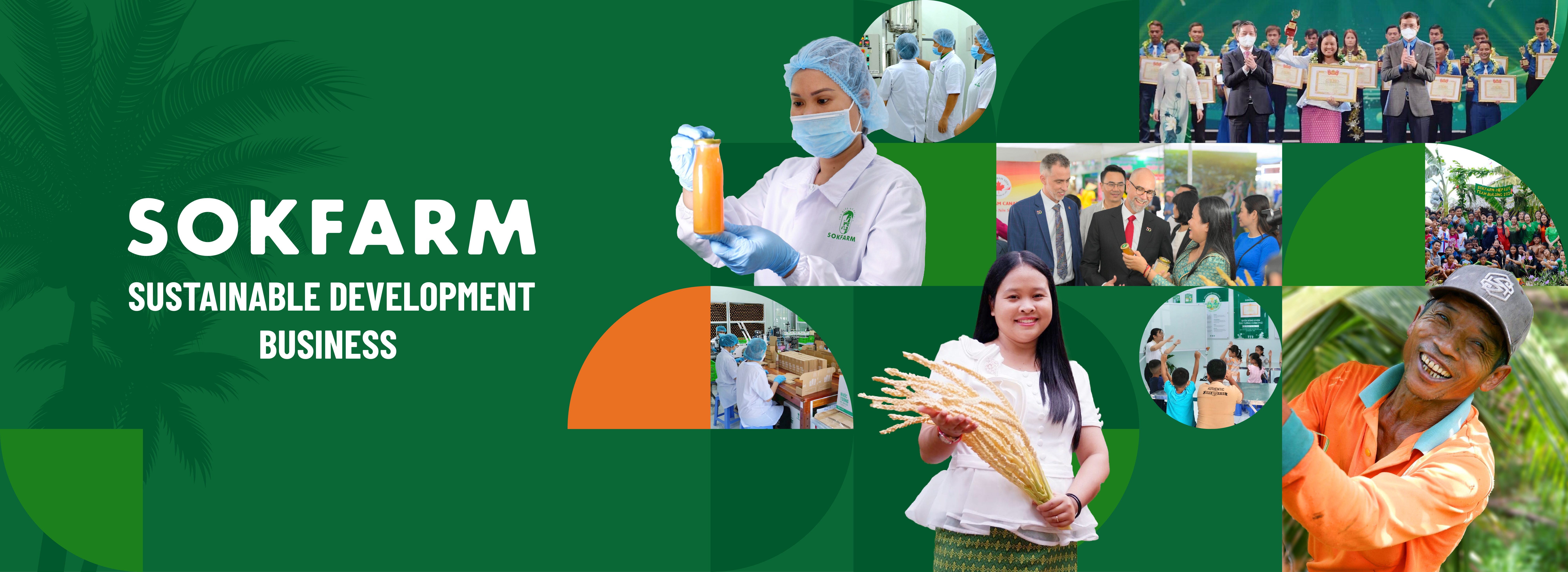
Banner ESG
Banner ESG

TOP 10 ESG VIETNAM 2023 | TOP 30 SIB VIETNAM 2023

Sokfarm pursues a business model that creates positive social impact — providing sustainable livelihoods for farmers, protecting the environment, and supporting community well-being through coconut flower nectar from Trà Vinh.

Our operations are guided by a balanced approach across Environmental, Social, and Governance (ESG) principles.
Organic Farming - Circular Production
Adaptable to Climate Change Industries
Creating a Professional and Balanced Job Environment
Building a Crop Management System
Environmental
Governance
Social
Health-Protecting Products
Happy Community
Building a Crop Management System
Enviromental
Governance
Social
Sokfarm aims to build a sustainable business that inspires future generations in Trà Vinh to continue developing local enterprises and contributing to the growth of their communities.

We are committed to operating in line with international organic standards, protecting land, water, and air — ensuring a green and healthy environment for generations to come.
ENVIRONMENTAL
SOCIAL
GOVERNANCE
Tra Vinh has over 25,000 hectares of coconut trees, and the situation of saline intrusion in the Mekong Delta region often reduces coconut yield by 30-70%. Sokfarm applies organic farming and pursues the industry of harvesting nectar from coconut flowers - adapting to climate change and saline intrusion.

ORGANIC FARMING - CIRCULAR PRODUCTION

Sokfarm applies an organic farming and circular production model to reduce environmental impact and enhance climate resilience. By cultivating coconuts in line with international organic standards, we ensure product quality while preserving soil health and water resources.

Our circular approach prioritizes the use of surface water and the reuse of distilled water generated during production, optimizing resource efficiency and minimizing environmental impact.
Sokfarm applies circular production methods, prioritizing surface water use, and reusing distilled water obtained during production, optimizing resources and minimizing environmental impact.

CLIMATE-RESILIENT COCONUT INDUSTRY

Coconut trees are naturally resilient to climate change. They help maintain groundwater levels, reduce soil erosion, and act as natural windbreaks, minimizing damage from storms.

Mature coconut trees (over 10 years old) can absorb significant amounts of CO₂ annually, contributing to the reduction of greenhouse gas emissions. Known as the “Tree of Life,” coconut trees are also highly adaptable to saline intrusion — a growing challenge in regions such as the Mekong Delta.

However, in high-salinity conditions, coconut fruit yields often decline. By shifting the focus from fruit harvesting to coconut flower nectar tapping, this approach reduces the impact of saline intrusion while opening new, more resilient pathways for the coconut industry.
In particular, each mature coconut tree (over 10 years old) can absorb a large amount of CO2 annually, helping reduce the impact of greenhouse gases. Coconut trees, known as the "Tree of Life," have been proven to adapt to saline intrusion, especially in the increasingly severe climate change situation.

Areas prone to saline intrusion often cause coconut trees to produce stunted and reduce yields. Focusing on coconut cultivation for sap harvesting not only avoids the impact of saline intrusion but also opens up new directions for the coconut industry in the Mekong Delta.
The demand for clean and organic products continues to rise, as consumers increasingly adopt healthier and more sustainable lifestyles. There is a growing preference for safe, natural products that support both personal health and community well-being.

In response to this trend, Sokfarm produces certified organic products that prioritize consumer health, while fostering a safe and healthy working environment — contributing to a more sustainable and inclusive community.

HEALTH-PROTECTING PRODUCTS

Sokfarm’s organic coconut flower nectar products are developed with a commitment to protecting community health and delivering safe, natural nutrition.

For Employees
Our internationally standardized organic farming and production processes minimize exposure to chemicals, ensuring a safe and healthy working environment from farmers to factory workers.

For Customers
Our products are made from natural, certified organic ingredients, offering high quality, a low glycemic index, and rich nutritional value — supporting healthier lifestyles for consumers.
Employee: International standard organic farming and production process, without exposure to chemical substances, ensuring the health of employee from farmers to workers.

Customer: Products processed from natural, organic ingredients, high quality, with low glycemic index, rich in nutrients, bringing health benefits to consumers.

HAPPY COMMUNITY

Farmers
ORGANIC COCONUT FARMING
Coconut cultivation follows international organic standards, verified annually. Farmers collaborate to ensure a stable and long-term supply of coconut flower nectar, supporting sustainable livelihoods over 15–20 years.
Workers
KHMER - ETHNIC MINORITIES
Sokfarm provides training and stable employment for local workers, particularly from Khmer communities, helping reduce migration and strengthen the local economy.
Office Staff
YOUNG SKILLED PROFESSIONALS
A team of young professionals in food technology, agriculture, and business contributes to building a structured and professional working environment.
Business Partners
SUSTAINABLE COLLABORATION
Collaborating with business partners towards green, sustainable consumption trends and having a long-term partnership strategy with Sokfarm.
Sok School
EDUCATION FOR THE NEXT GENERATION
Through English education programs for employees’ children, Sokfarm supports future opportunities and empowers the next generation to grow and contribute to their communities.
Tra Vinh has a high proportion of ethnic minorities, accounting for 40%, among which the Khmer people face many difficulties in finding jobs and often have to leave their hometowns for big cities to seek employment. Additionally, the land structure for cultivation is fragmented and small, leading to non-standard farming practices and a lack of systematic approaches. Sokfarm creates a professional and balanced working environment while also establishing an organic farming area for farmers.

CREATING A PROFESSIONAL AND BALANCED JOB ENVIRONMENT

Building a fair, respectful work environment that promotes the rights of women and ethnic minorities. Providing training and comprehensive career development opportunities for employees, especially recent graduates.

BUILDING A CROP MANAGEMENT SYSTEM

Farmers are guided to establish organic farming areas and efficient, sustainable crop management systems. Sokfarm has transparent and long-term procurement policies, helping support vulnerable farmers with stable incomes and increasing economic value by 3-5 times.

COMMITMENT PHASE 2023 - 2035

Sokfarm commits to implementing ESG (Environmental – Social – Governance) through the best human and financial resources. Sokfarm ensures positive impacts throughout the research, farming, production, and distribution process. We set goals to share progress in achieving ESG goals annually.

Renewable Green Energy

New factories use grid electricity and solar energy. Biomass boilers use locally available biological materials.

Emissions

Aiming for net-zero emissions during production by 2030.

Waste and Water

100% of distilled water obtained from coconut flower nectar is reclaimed for reuse, prioritizing rainwater harvesting and surface water use.

Transparent Supply Chain

100% of partner farmers meet international organic standards and have clear supply chain traceability.

Sustainable Supply

Sokfarm partners with 35 farmers and plans to expand cooperation to 500 farmers by 2030.

Inclusive Business Development (*)

Focused on developing local labor sources. Involving ethnic minorities (Khmer - Southern) in the production chain. Creating jobs for rural women, with 70% of Sokfarm's workforce being female.
(*) "Inclusive business" is a profitable business model that contributes to poverty reduction and sustainable development.
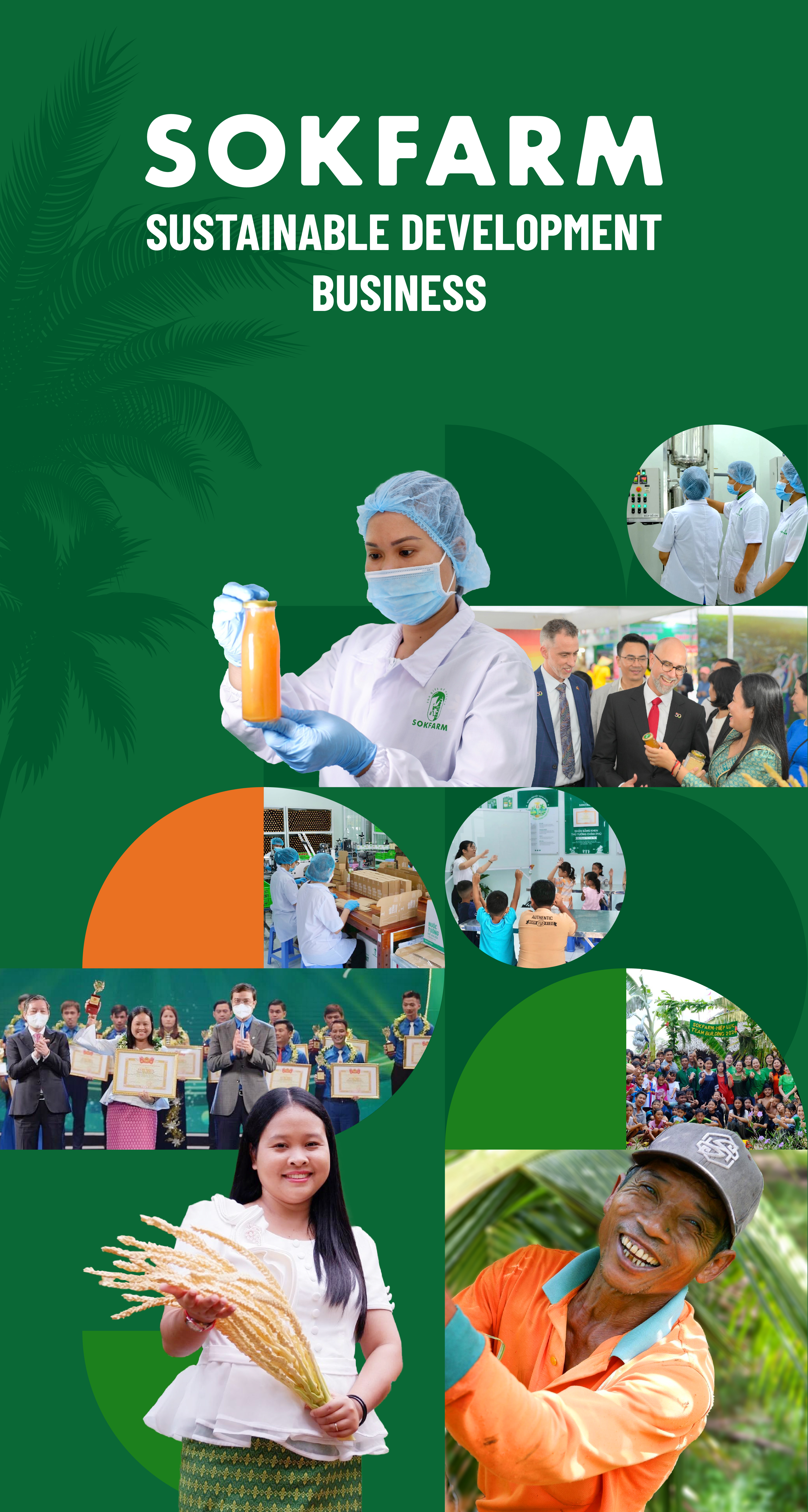
Banner ESG Bottom
Banner ESG Bottom
Banner ESG Bottom